


IPL hair removal for PCOS facial hair is a sought-after self-care solution for women who desire a luxury, at-home approach to managing facial hair caused by hormonal changes. As advanced beauty technology becomes more accessible, premium IPL devices promise salon-inspired results—but clear expectations and safety considerations are critical for anyone with PCOS evaluating these options.
Key Takeaways
- IPL devices gradually reduce visible hair by targeting pigment with pulses of intense light; real change requires consistency and patience.
- Choose devices with adaptive technology and reputable safety features, especially for sensitive facial areas or variable skin tones.
- Results for PCOS facial hair are typically partial and require ongoing maintenance—understand that total and permanent removal is unlikely.
The Core Concept
IPL hair removal for PCOS facial hair refers to using Intense Pulsed Light technology to manage unwanted hair growth on the face, a common symptom of polycystic ovary syndrome. In luxury at-home routines, IPL has become popular as an alternative to frequent waxing or costly salon laser treatments. Premium IPL devices work by emitting light pulses that are absorbed by melanin in the hair, weakening the follicle over multiple sessions.
Unlike quick fixes, IPL is about gradual improvement and fits seamlessly into a high-end self-care regimen. Luxury models often feature additional comfort settings or attachments for sensitive facial zones, aiming to make the process more efficient and comfortable for users managing hormonally driven hair growth.
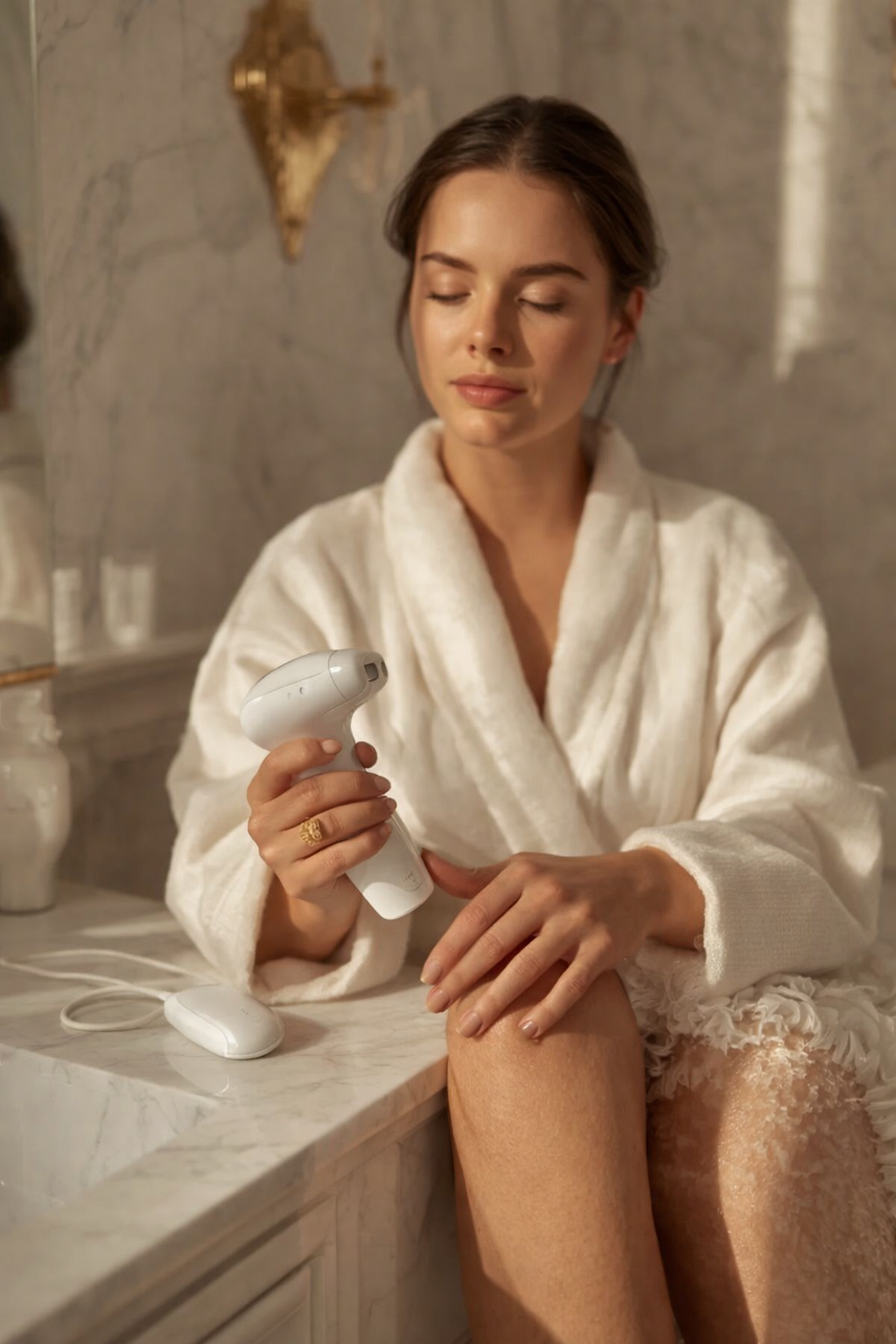
For women looking to invest in premium at-home IPL device, the motivation is control and convenience: transforming what was once an uncomfortable in-clinic process into a private wellness ritual. However, PCOS-induced hair has unique characteristics that affect results—making realism about outcomes essential at every step.
Step-by-Step Guide
A methodical approach delivers the best results when using an at-home IPL device for PCOS facial hair. Here’s how to integrate IPL safely and efficiently into your beauty routine:
- Preparation: Cleanse skin thoroughly and shave the area to remove surface hair. Never wax or pluck, as IPL needs the hair root present to work.
- Patch Test: Perform a spot test on a small area at least 24 hours before full treatment. This checks for any unexpected skin reaction.
- Settings Selection: Use the device’s recommended settings for your skin tone and hair color. Luxury models may offer sensor-guided adjustment—reference your manual closely.
- Treatment: Apply the IPL pulses systematically in single, even passes. Do not overlap flashes to avoid irritation.
- Consistency: Stick to the session schedule, usually once a week for the initial phase (typically 12–16 weeks). Results for PCOS facial hair build up gradually over time, not overnight.
- Maintenance: Expect periodic top-ups, often monthly, since ongoing hormonal activity can stimulate new hair.
- Aftercare: Soothe skin with fragrance-free moisturizer and apply sunscreen daily.
💡 Pro Tip: For sensitive chin or lip areas, start with the lowest intensity setting and gradually increase as tolerated. If your device offers a special facial attachment, use it to improve precision and safety.🔥 Hacks & Tricks: Always take before-and-after photos every month. Tracking your progress objectively helps set realistic expectations and minimizes frustration if your results are gradual, which is common for PCOS facial hair.

It’s important to respect each device’s manufacturer instructions, especially regarding eye protection and safe usage zones. Not all devices are equally suited to every skin type or facial contour—some luxury brands, such as those reviewed in our IPL device safely online
, offer extra cooling or contouring features for added comfort.
Advanced Analysis & Common Pitfalls
Despite premium designs, IPL’s effectiveness for PCOS facial hair varies based on individual hormone levels, hair thickness, and skin type. Understanding these variables will help you avoid the most common pitfalls and make an informed decision, especially with the significant investment typical of luxury at-home IPL devices.
What Does the Research Say?
Studies show that after six months of IPL treatments, women with PCOS saw around a 40 percent median reduction in facial hair (source). While this is meaningful, it is not total removal. Electrolysis remains superior for permanent facial hair reduction in hormonally sensitive areas like the chin and lips, with results typically ranging from 90 to 95 percent reduction (source).
Some users report satisfaction even with only partial reduction due to the psychological benefits of having less visible hair (source). However, results depend heavily on consistency and ongoing maintenance, as PCOS can stimulate the growth of new follicles that may require regular touch-ups.
Safety and Suitability Considerations
- Skin Tone Limitations: IPL is safest and most effective for lighter skin tones with dark hair. For those with medium to deep skin, IPL can be less reliable and raises risks of pigmentation changes or burns. See our expert coverage of IPL for dark skin tones for safe device selection and alternatives.
- Variability in Results: PCOS-related hair is often coarse and hormonally driven, making it more stubborn than typical body or leg hair. This may require more sessions and rigorous adherence to maintenance schedules.
- Device Features: Some luxury models, like the Philips Lumea 9900 SkinAI (smart skin sensors), offer smart skin sensors and adaptive energy levels, but current evidence does not conclusively show superior outcomes for PCOS facial hair over less expensive models.
- Paradoxical Growth: A small number of PCOS users may experience increased hair growth (paradoxical hypertrichosis) with light-based treatments, though this is rare and appears more often with laser than IPL (source).
| Feature/Factor | IPL for PCOS Facial Hair | Electrolysis |
|---|---|---|
| Reduction Rate (Facial Area) | Approx. 40% at 6 months; 50–79% long term | 90–95% permanent reduction |
| Sessions Needed | More sessions, frequent maintenance | Numerous sessions, infrequent maintenance |
| PCOS Hair Suitability | Moderate efficacy | Highest efficacy |
| Pain Level | Minimal (luxury devices with ice cooling or smart sensors may enhance comfort) | Moderate, depends on user sensitivity |
| Cost (At-Home Device) | One-time investment; price varies (compare luxury models) | Clinic-based; costs accumulate over time |

One notable gap is a lack of detailed, device-specific evidence for luxury IPL tools designed specifically for the face or for women with PCOS. Most claimed innovations, like contour heads or custom adapters, rely on manufacturer testing rather than independent long-term outcome data. Research your target device’s features, owner reviews, and any available safety documentation before purchasing.
For more ways to enhance comfort and avoid discomfort, explore our dedicated article: best ipl pcos facial Hair Removal.
Conclusion
Luxury at-home devices for IPL hair removal for PCOS facial hair offer discreet, gradual hair reduction—but not a permanent solution. Results depend on many personal and hormonal factors, and realistic expectations are crucial. Always prioritize safety, informed device selection, patience, and awareness of ongoing maintenance needs.
Before you buy, compare device features and study real owner experiences—see our premium IPL buyer’s guide for detailed comparisons. If you have darker skin, consult additional resources to ensure safe usage. Above all, invest time in understanding what works for your unique PCOS pattern—and be cautious with promises of quick, permanent results.
learn more about Hormonal hair
see our full guide
FAQ
Is IPL safe for PCOS facial hair?
IPL is generally considered safe for facial use when following manufacturer instructions. However, results and comfort can vary, especially with hormonal hair growth. Sensitive zones like the upper lip or chin may need lower settings and greater care. Always do a patch test first.
How long does it take to see results with IPL for PCOS facial hair?
Most users see gradual improvement within 3–6 months when treating PCOS facial hair. Initial smoothing may appear after several sessions, but fuller results often require patience and consistent weekly use. Individual results vary.
Are IPL results for PCOS facial hair permanent?
No, IPL results are not considered permanent for PCOS facial hair. Many users experience hair regrowth due to hormonal factors, so ongoing maintenance sessions are needed to keep results.
Is IPL effective on all skin tones and hair colors?
IPL works best on lighter skin with dark hair. It is less effective for very light, red, gray, or white hair, and may increase risks for those with medium to deep skin. Always check your device’s suitability chart before use.
Do luxury IPL devices offer better results than standard models?
Luxury models often provide features such as smart skin sensors, cooling functions, and adaptive attachments for complex facial areas. While these enhance comfort and convenience, current research does not prove superior long-term hair removal results for PCOS facial hair compared to standard IPL devices.