



IPL vs waxing cost comparison is one of the most important questions for anyone evaluating luxury at-home hair removal devices. For those choosing between premium technology and traditional salon routines, understanding what sets IPL apart—and its limitations—can profoundly influence your self-care investment.
From device costs and time saved to comfort, convenience, and long-term value, this guide provides a transparent look at the real differences between at-home IPL and waxing. If you expect clear answers before making a luxury beauty investment, you are in the right place.
Key Takeaways
- At-home IPL devices reduce hair regrowth over time, making maintenance less frequent after the initial phase.
- Device lifespan, skin tone compatibility, and ongoing maintenance must be considered before purchase.
- Expect gradual improvement—not permanent removal—with maintenance required, especially for areas with lighter or fine hair.
- What Is IPL vs Waxing Cost Comparison and Why Does It Matter?
- Step-by-Step: How to Use At-Home IPL Safely and Effectively
- Advanced Analysis & Common Pitfalls in the IPL vs Waxing Debate
- Conclusion
- Frequently Asked Questions
What Is IPL vs Waxing Cost Comparison and Why Does It Matter?
An IPL vs waxing cost comparison examines both the real expenses and experience differences between luxury at-home IPL devices and traditional waxing, whether done in a salon or at home. This evaluation covers not only the up-front spending but also the maintenance, time commitment, comfort, long-term regimen, and suitability for different skin and hair types.
IPL—Intense Pulsed Light—uses broad-spectrum light energy to target hair follicles, weakening their regrowth cycle. As a premium self-care technology, premium at-home IPL devices offer a promise of reduced at-home maintenance after several months of consistent use. In contrast, waxing removes hair from the root for immediate smoothness but always requires repeating every few weeks.
For luxury buyers, cost goes beyond upfront price. It includes the value of comfort, minimal mess, time saved, fewer ongoing purchases, and the ability to control your hair removal schedule on your own terms. Both options require thoughtful consideration before investing, as each has hidden costs and practical limitations not always discussed in typical marketing.
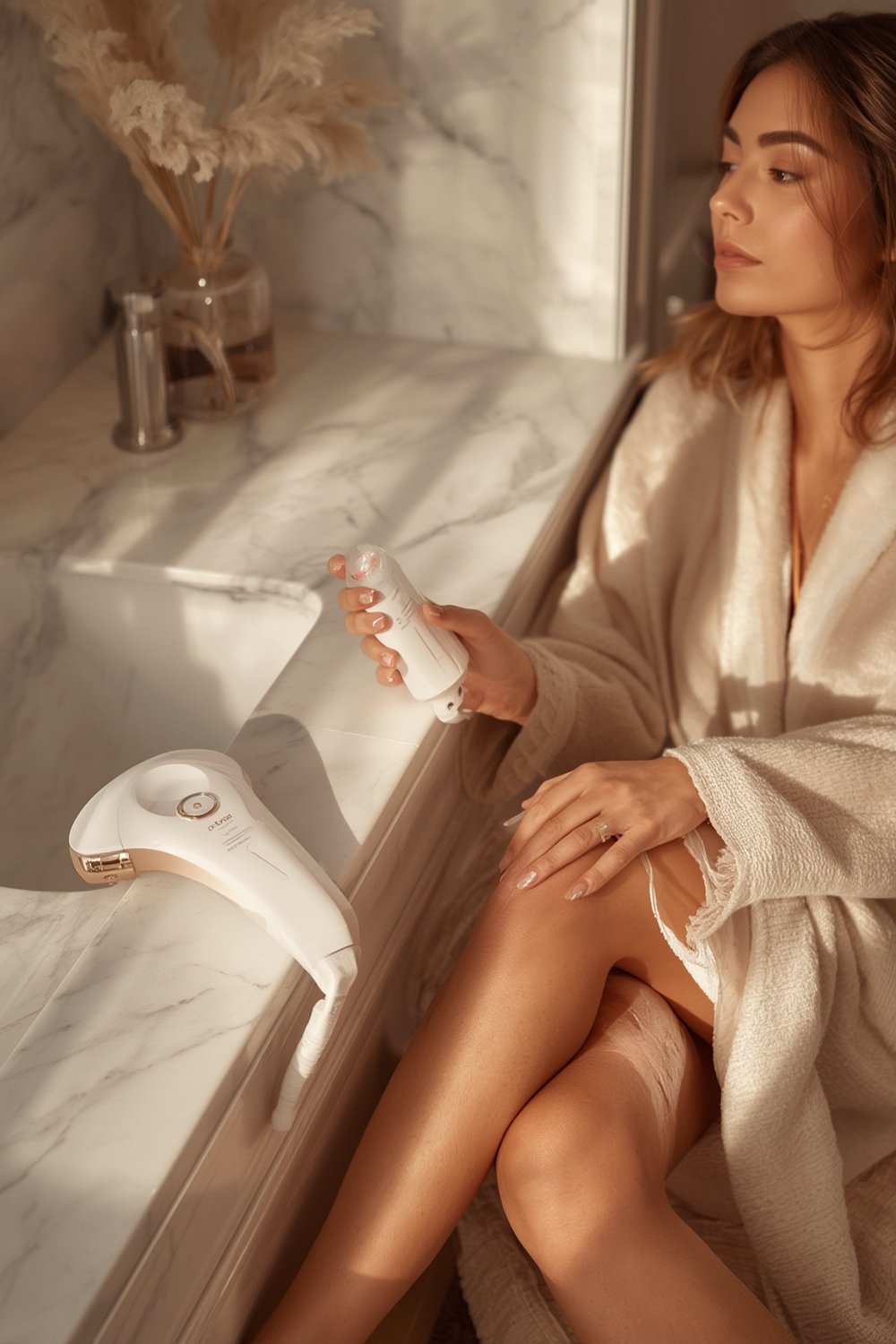
Step-by-Step: How to Use At-Home IPL Safely and Effectively
The following steps outline a safe, realistic approach to using a premium IPL hair removal device at home:
- Review suitability: Confirm your skin tone and hair color fall within your device’s safe and effective range. Most IPL works best on light skin with dark hair. If in doubt, see our IPL for dark skin guide.
- Prepare skin: Shave (do not wax or tweeze) 24 hours before treatment so that energy targets the follicle beneath the skin. Dry your skin thoroughly and avoid creams, perfumes, or self-tanners.
- Patch test: Test on a small area and wait 24 hours to check for any reaction, especially if your device is new or your skin is sensitive.
- Select the right setting: Use the manufacturer’s skin sensor (if included) or choose a setting rated for your skin tone and comfort level. Start low and increase gradually.
- Treat each area methodically: Work in grid patterns. Overlap slightly, but never pulse the same area twice in one session.
- Initial schedule: Use once per week for at least 8 to 12 weeks, or as recommended by your device’s manual. Consistency is crucial for effective results.
- Maintenance phase: After visible reduction, shift to once every 1 to 2 months as needed for touch-ups.
- Aftercare: Avoid hot showers, direct sun, or active skincare actives for 24 hours. Use a cooling gel or soothing moisturizer as needed.
Each device has its own nuances. Consult your device instructions, and see difference ipl vs laser hair removal
Those seeking truly pain-free and comfortable routines can consider devices with ice-cooling technology. See our expert breakdown at Ice Cooling IPL Hair Removal.

Advanced Analysis & Common Pitfalls in the IPL vs Waxing Debate
Choosing between IPL and waxing involves more than just the sticker price. Let’s break down the deeper realities of cost, time, comfort, and results—especially for buyers expecting refined results and transparency.
Cost Analysis: The Real Numbers
| Factor | Professional Waxing (Annual) | At-Home Waxing (Annual) | Premium At-Home IPL (Annualized 3–5 Years) |
|---|---|---|---|
| Purchase/Per Session | $60–$3,600 (6–12 sessions/year) | $60–$360 (6–12 kits/year) | $40–$300 ($200–$900 upfront) |
| Maintenance | None specified | Ongoing kit purchases | Batteries/add-ons (not always disclosed) |
IPL’s lower annualized cost emerges over several years thanks to reduced sessions after the initial phase. However, up-front investment and device lifespan (including possible battery or flash unit replacements) are often understated in online marketing.
Sources: ulike.com, Clinicacosmetics.com.au, Evenskyn.com
Regrowth and Smoothness Timeline
| Method | Regrowth Frequency | Smooth Skin Duration | 12-Month Sessions |
|---|---|---|---|
| Waxing | Every 4–6 weeks | 4–6 weeks | 6–12 |
| IPL | Maintenance every 1–2 months after reduction | 6–8 weeks initially, up to 2–6 months | Weekly at first, 6–12/year maintenance |
Waxing provides consistent but temporary results—hair regrows fully. At-home IPL, if used as directed, leads to less frequent maintenance and much finer regrowth. But be aware: IPL does not eliminate all hair for everyone, and regrowth can occur if usage lapses.

Limitations & Suitability
- Skin Tone & Hair Color: Most at-home IPL devices are safest and most effective on light skin with dark hair. They are less effective on blonde, red, grey, or very fine hair and pose a higher risk for burns or discomfort on deep skin tones. See latest device recommendations for a range of tones at Best IPL Device For Dark Skin.
- Patience Required: IPL requires regular, disciplined sessions for the first several months. Skipping weeks can delay or reverse progress.
- Maintenance Is Ongoing: Despite “lifetime” marketing claims, hair regrowth will occur without maintenance. Devices also have finite flash counts or battery life—this can mean replacing or servicing after 3–5 years.
- Device Limitations: At-home IPLs are less powerful than professional lasers or IPL, resulting in slower and sometimes patchy results. These technical limits are rarely disclosed fully.
User Frustrations & Common Pitfalls
| Complaints | IPL | Waxing |
|---|---|---|
| Top Issues | Patchy results, regrowth, device limits | Pain, time required, ingrown hairs |
| Pain Level | Low to moderate | High (especially on sensitive skin) |
| Other | Ongoing maintenance and device wear | Cost and repetition build up indefinitely |
Some buyers discontinue IPL because of patchy outcomes, slow progress on lighter hair, or finding maintenance requirements higher than expected. For waxing, the common theme is pain, recurring ingrown hairs, and the need to repeat treatments without any change in the regrowth cycle.
Hidden Costs & Transparency Issues
Major online reviews often gloss over:
- Device Lifespan: Flash count and battery wear can limit years of use.
- Replacement/Servicing: Occasional out-of-warranty fixes or add-ons may be needed. Most brands do not advertise long-term support.
- Waxing Kit Accumulation: “Small” at-home purchases can add up to hundreds per year over time, subtly exceeding expectations.
Luxury Perspective: Time, Comfort & Value
For most self-care connoisseurs, IPL stands out for luxury because:
- Sessions are shorter (about 12–30 minutes per body area) and usually less painful.
- No sticky residue, no risk of waxing burns, and less risk of ingrown hair post-treatment.
- Value improves over time—with caveats about device maintenance and need for patience.
If you expect completely permanent removal or zero maintenance, neither option will truly deliver. You will, however, experience considerably less tedious daily hair removal using a premium IPL compared to waxing, if your skin and hair type are suitable. For a closer look at user experiences, see our review of the Ulike Air 10 IPL.
Conclusion
Luxury self-care is about honest results, convenience, and true cost transparency. This comprehensive IPL vs waxing cost comparison shows that premium at-home IPL offers lower annualized costs, smoother routines, and more long-term value—if you have the right skin and hair type and are committed to regular maintenance. However, buyers must know device limitations, the need for patience, and the reality that results will never be fully permanent.
Compare all variables carefully, read device guides like our best IPL device roundup, and set realistic expectations for your self-care journey. For those focused on smart investment, comfort, and flexibility in luxury beauty, a detailed IPL vs waxing cost comparison is the foundation for making the right choice. Continue exploring advanced insights, user advice, and individualized tips across our site to ensure a confident decision.
Frequently Asked Questions
Is at-home IPL safe for all skin tones and hair colors?
No. Most at-home IPL devices work best for light to medium skin with dark hair. They are less effective or can be unsafe on deep skin tones or very light, red, or gray hair. Always check device guidelines or see our comprehensive guide.
How long do results last, and is IPL hair removal permanent?
Results are not permanent. Most people experience hair reduction after 2–3 months of regular use, but ongoing maintenance is needed every 1–2 months. If you stop, regrowth usually resumes.
How does the real cost of IPL compare to waxing over three years?
Premium at-home IPL devices average $200–$900 up front, with an annualized cost of $40–$300 if used for 3–5 years. Waxing costs $60–$3,600 annually (pro salon) or $60–$360 (at-home kits), and continues indefinitely. IPL typically becomes less expensive over time.
Does IPL hurt more or less than waxing?
Most users report IPL is less painful than waxing, describing mild heat or tingling rather than sharp pain. Devices with ice-cooling add extra comfort. Waxing is often much more painful, especially on sensitive areas.
What is the maintenance and lifespan of a premium IPL device?
Lifespan depends on the device’s flash count and battery. While marketed as “lifetime,” many devices require maintenance or replacement after 3–5 years. Read our complete device lifespan breakdown for more info.